

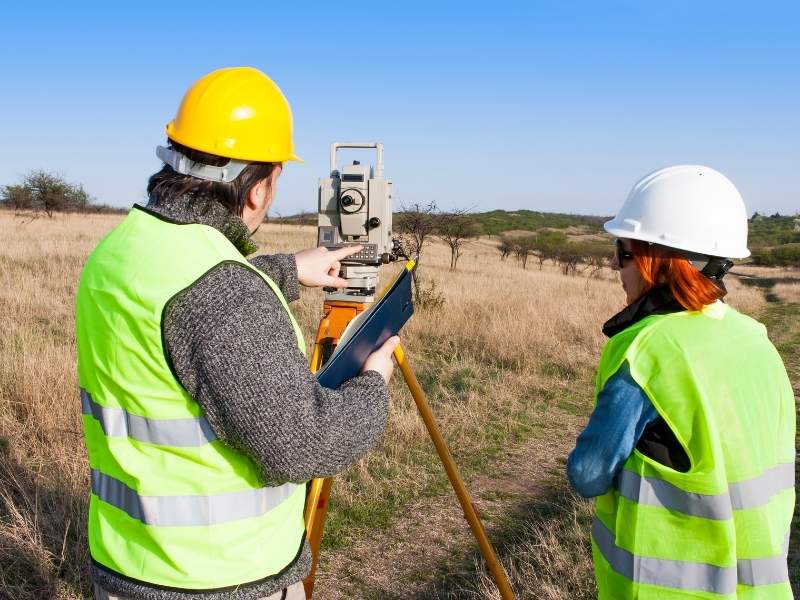
When you hire someone to survey your land, the most important question is not how much they charge. It is whether they hold an active license. A licensed land surveyor carries legal authority that no other professional or tool can replicate. That authority is the difference between a document your bank accepts and one that holds no legal standing whatsoever.
This article explains what a license actually means, what it takes to earn one, and why that matters to any property owner.
What the License Actually Means
A license is not just a certificate hanging on a wall. It is legal authorization to practice. Without it, a person cannot legally determine property boundaries, prepare legal descriptions, or certify survey documents for official use.
Every state regulates land surveying through its own licensing authority. Only someone with an active license issued by the appropriate board can sign and stamp a survey document. That signature is what gives the document legal standing.
An unsigned survey has no standing in court. It cannot be recorded with a county and will not satisfy a lender or title company, regardless of how it was prepared or what equipment was used.
This is a hard line, not a technicality. Hiring an unlicensed person to do boundary work leaves you with something that looks like a survey but cannot legally function as one. The same is true of digital tools that generate parcel maps without professional certification.
What It Takes to Earn That License
The path to becoming a licensed land surveyor is intentionally demanding. The licensing process exists to protect the public because mistakes in boundary work can affect land ownership for generations.
Candidates typically begin by completing formal education or gaining qualifying experience in surveying. They must pass national examinations and accumulate years of supervised field and office experience before becoming eligible for full licensure. Many states also require additional exams covering local laws and regulations.
From start to finish, becoming a licensed land surveyor often takes many years. The surveyor who walks your property has spent countless hours learning how to measure land, research deed history, interpret conflicting records, and resolve discrepancies.
They know how to document their findings in a way that holds up under legal scrutiny.
The Work Only a Licensed Surveyor Can Perform
Some of the most important tasks in property ownership and development can only be completed legally by a licensed land surveyor.
Setting and Certifying Property Corners
When a licensed surveyor places a monument, that marker becomes a legal reference point. Only a licensee can legally establish those points and file records of the work with government agencies.
Preparing Legal Descriptions
A legal description is the written definition of a parcel used in deeds, titles, and official records. Only a licensed surveyor can prepare and certify these descriptions for use in legal documents.
Signing and Stamping Survey Documents
Every survey used in a real estate transaction, permit application, or legal proceeding must carry the signature and seal of a licensed land surveyor. Without that seal, the document cannot be officially recorded or relied upon.
Serving as an Expert Witness
When a property dispute reaches mediation or court, a licensed land surveyor can testify as an expert witness and explain how the boundary was determined. An unlicensed individual does not have the same legal standing or professional authority.
These are not optional services. They are responsibilities that require a license.
Why Technology Does Not Replace the License
GPS equipment, drone cameras, and satellite mapping have made data collection faster and more accurate than ever before. None of that changes the need for a licensed professional.
The tools collect information. A licensed land surveyor interprets it.
Surveyors research deed history, locate original monuments, and reconcile conflicts between old and new records. Those professional judgments determine where a boundary legally falls.
A drone cannot do that. A mapping app cannot do that.
Technology is valuable, but it does not replace the legal authority and expertise that come with a license.
Relying on technology-generated maps for anything beyond a rough visual reference is a common mistake. Those maps are useful starting points. They are not surveys.
How to Confirm a Surveyor Is Licensed
Before hiring anyone to perform survey work, confirm that their license is active in the state where your property is located. Most state licensing boards maintain public databases that allow consumers to verify a surveyor’s credentials online.
Ask the surveyor for their license number and verify it directly. An active license in good standing is the minimum requirement.
Beyond that, make sure they have experience with the type of work you need, whether it involves a boundary survey, construction staking, subdivision plat, or topographic survey.
If a surveyor cannot provide a license number, or if the license is inactive or expired, do not proceed. The work they produce may not be legally usable.
Why Hiring a Licensed Professional Protects You
Surveying is more than measuring distances. It involves legal research, professional judgment, and accountability.
If mistakes are made, a licensed surveyor is responsible for their work and must comply with the standards established by their state licensing board.
That accountability protects property owners, lenders, title companies, and future buyers.
It also gives you confidence that the survey you receive can stand up to scrutiny if questions ever arise.
Frequently Asked Questions
Is a licensed land surveyor different from someone who simply uses surveying equipment?
Yes. Anyone can buy GPS equipment or use mapping software, but only a licensed land surveyor has the legal authority to certify boundaries and prepare survey documents for official use.
Can a civil engineer perform survey work instead of a licensed land surveyor?
In some states, certain engineering professionals are authorized to perform limited surveying activities. However, boundary determinations and legal descriptions are generally the responsibility of a licensed land surveyor. Requirements vary by state.
Do survey licenses need to be renewed?
Yes. Licensed land surveyors must maintain active licenses and comply with the renewal requirements established by their state licensing boards. An expired license means the surveyor cannot legally certify documents until the license is restored.
What happens if I use a survey prepared by an unlicensed person?
The document may have little or no legal standing. It may not be accepted for permits, real estate transactions, or legal proceedings, and any work based on that document may need to be redone.
Can I verify a surveyor’s license myself?
Yes. Most state licensing boards maintain public databases where consumers can search by name or license number. Verifying a surveyor’s credentials before hiring them is always recommended.